Bubble-Free Electrode Slurry in 60 Seconds.
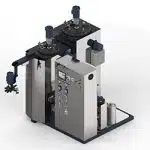
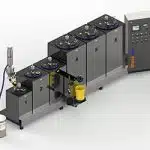
The Vortex Mixer is a planetary centrifugal mixer that disperses cathode and anode slurries, solid-electrolyte composites, and dry-electrode powder blends with air-free precision, in disposable containers, in 30 to 60 seconds. Nine models from a 30 g benchtop cup to 200 kg drums, four with vacuum degassing built into the same cycle, so the recipe you validate at the bench is the one you scale.
- CE Certified
- Same platform from 30 g to 20 kg
- Built in Canada since 1969
- On-site service, worldwide
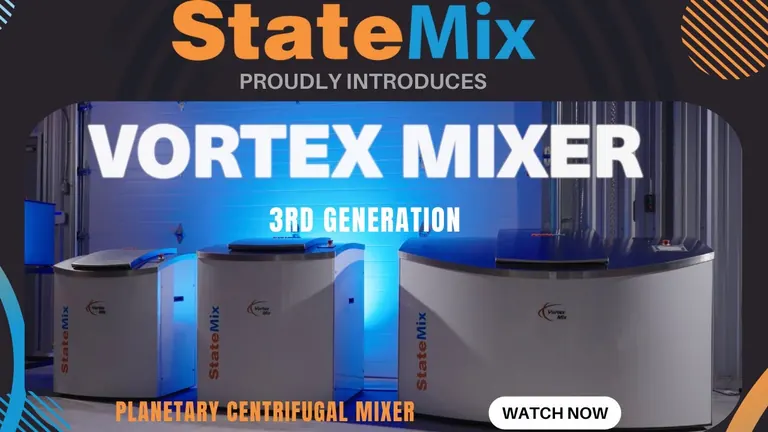
Watch the Vortex Mixer Blend the Unblendable
Dual-axis planetary centrifugal motion spins and rotates the container at the same time, forcing a vortex through the material itself. Active material, binder solution, and conductive carbon fold into each other with nothing touching the slurry.
 ▶
Pour
Weigh active material, conductive additive, and binder solution into an off-the-shelf cup or pail.
Snap the Lid
Seat the sealed container in the holder. Dial the counterweight to the batch mass.
Press Start
A stored recipe sets speed and duration. VAC models pull vacuum during the same cycle.
Most slurries fully dispersed in 30 to 60 seconds. Swap containers and mix the next formulation with zero carry-over.
Why Battery Teams Mix Slurry This Way
A planetary centrifugal mixer spins a sealed container around a central axis while rotating it on its own axis, the way a planet orbits and turns. The two motions push the slurry outward and fold it back on itself, so active-material powders, conductive carbon, and binder solution disperse evenly with no impeller shearing the particles and no blade to scrape. Trapped air, the cause of pinholes and streaks in the coated electrode, is driven out, and the VAC models pull hard vacuum during the same cycle.
Benchtop planetary mixers are already standard in cell-development labs. The Vortex Mixer applies the same principle from a 30 g coin-cell batch to 20 kg pilot-line batches, on one platform, with the same recipe logic.
- Electrode slurry mixing
- Cathode and anode slurries (NMC, LFP, LMFP, graphite, silicon, hard carbon) dispersed to coating-ready consistency in one short cycle, without hours on a double-planetary mixer.
- Vacuum degassing
- VAC models reach −28 inHg in about 45 seconds while mixing, so the slurry leaves the container bubble-free and ready for the coater. No separate degassing step.
- Dry-electrode and electrolyte blends
- The same motion blends dry powder premixes and solid-electrolyte composites. Air-sensitive chemistries need inert handling: tell us your material and we will confirm the setup.
Why Cell Developers Switch to Vortex Mixing

Bladeless, Air-Free Dispersion
No impeller in the slurry. Uniform, bubble-free mixes that coat without pinholes or streaks.

Dual-Axis Planetary Motion
Spins and rotates the container at once, working high-solids, high-viscosity pastes that stall paddle mixers.

Minutes, Not Hours
Most formulations fully dispersed in 30 to 60 seconds. Run more recipe iterations per day.

Coin Cell to Pilot Line, One Platform
Nine models from 30 g to 200 kg on the same mixing principle. Validate at the bench, scale without re-qualifying.

No Cross-Contamination Between Chemistries
Each batch lives in its own disposable cup or pail. Switch from NMC to LFP to silicon with nothing to wash.

Stored Recipes, Repeatable Batches
Speed, duration, and vacuum stored per formulation, so every batch of the same recipe comes out the same.
What Battery Teams Mix on a Vortex Mixer
If it goes into an electrode, an electrolyte, or a separator coating, it needs to be dispersed evenly and without air. These are the formulations we are asked about most.
NMC, NCA & Ni-rich slurries
Active material, conductive carbon, and PVDF/NMP binder dispersed to coating viscosity in one cycle.
LFP & LMFP slurries
High-solids aqueous or NMP-based LFP pastes, including carbon-coated powders that agglomerate in paddle mixers.
Graphite & silicon anode slurries
CMC/SBR water-based anode slurries and silicon-carbon blends mixed without shearing the particles.
Hard carbon & layered-oxide electrodes
Sodium-ion cathode and anode slurries at the coin-cell and pilot-pouch scale.
Solid electrolyte composites
Polymer, oxide, and composite electrolyte slurries for tape casting. Sulfide systems: ask about inert handling.
Sulfur & carbon cathodes
Lithium-sulfur cathode composites with high carbon loadings that need thorough, gentle dispersion.
Dry-electrode powder premix
Active material, binder, and conductive additive blended dry before fibrillation or electrostatic coating.
Conductive carbon & CNT dispersions
Carbon black, graphene, and nanotube pre-dispersions in binder solution, bubble-free.
Nine Models. Coin Cell to Pilot Line. All CE Certified.
Every Vortex Mixer uses the same bladeless planetary centrifugal principle, so a slurry proven in a 30 g cup scales to a 20 kg pail on the same recipe logic.
VM200 and VM1000: recipe screening, coin and single-layer pouch cells.
VM2500 and VM10,000, with VAC options: multilayer pouch builds and roll-to-roll trials.
VM20,000 and VM200K: pilot-line batches and drum-scale pre-mixes.
Pick the batch size that matches your coater, then step up without changing how the slurry is made.
| Model | Batch Capacity | Vacuum Degassing | Container | Typical Battery Use |
|---|---|---|---|---|
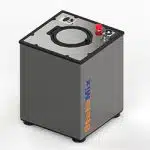
 VM200 | 30 – 200 g | — | 8 oz cup | Formulation screening, coin cells |
 VM1000 | 300 – 1,000 g | — | 2.25 L pail | Single-layer pouch cells, small coating trials |
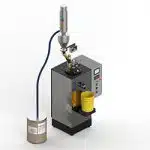
 VM1000-VAC | 300 – 1,000 g | ✔ −28 inHg in 45 s | 2.25 L pail | Mix + degas for slot-die coating; 7 stored recipes |
 VM2500 | 0.5 – 2.5 kg | — | 1 gal / 4 L pail | Multilayer pouch cells |
 VM2500-VAC | 0.5 – 2.5 kg | ✔ | 1 gal / 4 L pail | Bubble-critical pouch and roll-to-roll trials |
 VM10,000 | 4 – 10 kg | — | 5 gal / 20 L pail | Pilot coating line batches |
 VM10,000-VAC | 4 – 10 kg | ✔ | 5 gal / 20 L pail | Pilot-line mix + degas in one step |
 VM20,000 | 6 – 20 kg | — | Two 5-gal pails | Dual-pail pilot-line and pre-production batches |
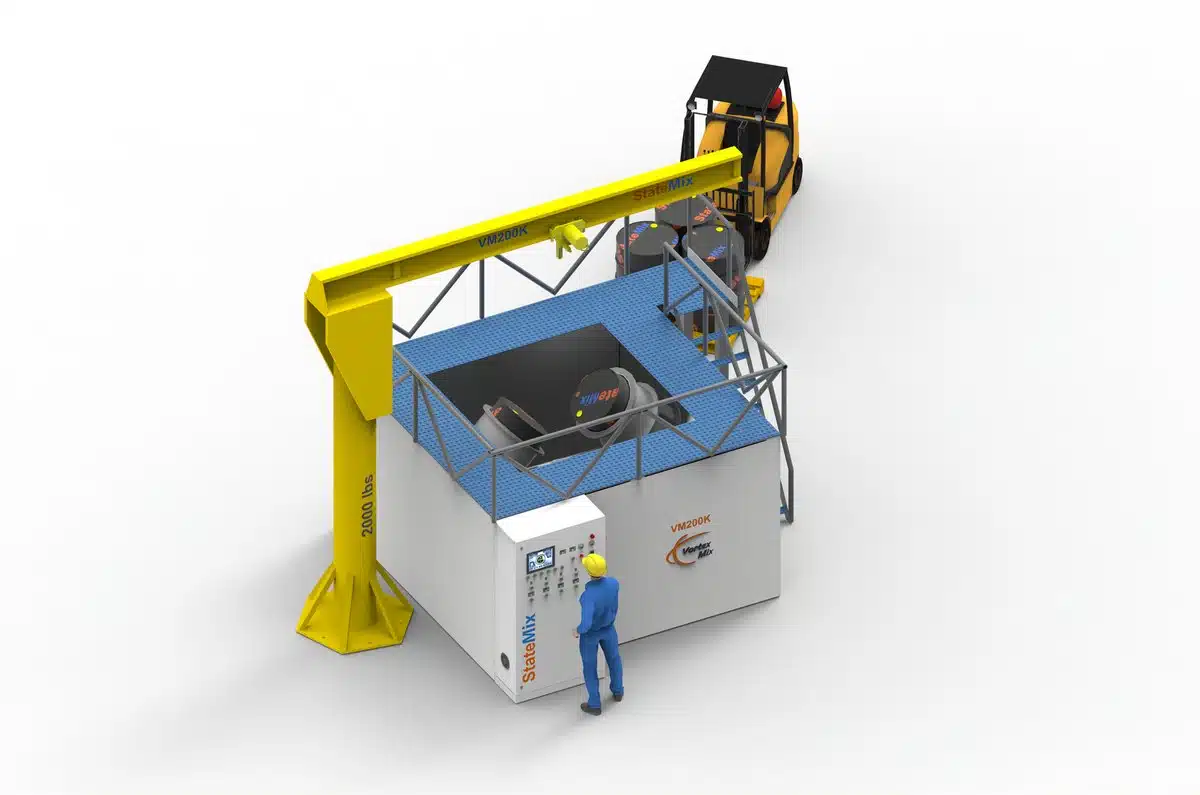 VM200K | 20 – 200 kg | ✔ | Two 55 gal / 200 L drums | Drum-scale pre-mix and production batches |
Click any mixer image for details · Lower minimum quantities can be mixed using an adaptor
Not sure which size matches your coater and batch plan? Talk to a Technical Expert
Companies We’ve Worked With







“The Vortex Mixers have worked really well for us, helping ensure a consistent mix of our product while also eliminating air bubbles that can cause surface defects.”Shannon D. Smith, General Manager, Dynatect Ro-lab Manufacturing, Inc.
“We’ve been very happy with the Vortex Mixer. It’s easy to use, reliable, and gives us consistent results every time we use it.”Nathan Lamoureux, Development Engineer, Mearthane Products Corporation
“Our Statemix Vortex Mixers are some of the best investments we’ve made. The quality of the end product and the speed of production are completely unmatched by conventional methods.”Mason Klein, President, Uniflex Inc.
Trusted on Production Floors Worldwide
From our Winnipeg headquarters, StateMix equipment has shipped to 29 countries on six continents, with factory technicians who travel to your facility for installation, training, and service.
Building or equipping a pilot line?
Tell us your batch size and coater, and a technical expert will size the mixer within 1 to 2 business days.
Request a QuoteBeyond the Benchtop Planetary Mixer
Lab-scale planetary mixers top out at a few hundred grams, and pilot-scale double-planetary mixers take hours per batch. The Vortex line covers both jobs on one bladeless principle.
| StateMix Vortex Mixer | Typical lab planetary & pilot double-planetary mixers | |
|---|---|---|
| Batch range on one platform | 30 g to 200 kg across 9 models | Lab units stop at a few hundred grams; pilot mixers start at litres |
| Time per batch | Most slurries in 30 to 60 seconds | Minutes on the bench; often hours at pilot scale |
| Integrated vacuum degassing | ✔ VAC models reach −28 inHg in 45 s during the mix | Varies; often a separate step or a vacuum-chamber accessory |
| Changing chemistries | Disposable cups & pails: no cleaning, no carry-over between NMC, LFP, and silicon | Bowl and blades cleaned between recipes |
| Scale-up path | Same mixing principle and recipe logic from coin cell to pilot line | Re-validation on different equipment at each step |
| Built & supported in | Canada, with factory techs who travel worldwide | Often overseas, third-party service |
Send Us Your Slurry Components
Think your high-solids LFP paste, silicon anode blend, or carbon-heavy sulfur cathode won’t mix bubble-free in a minute? We hear that a lot. We also enjoy proving it wrong.
Our team mixes your formulation on a Vortex Mixer at our Winnipeg facility, records the cycle, and shows you exactly what came out of the container. No cost, no obligation.
How it works
- Email us your recipe: active material, additives, binder system, and target solids.
- We confirm the setup, including vacuum or inert handling if your chemistry needs it, and where to ship the components.
- We mix it, document the result, and walk you through it on a call.
Battery Slurry Mixing FAQ
Which electrode slurries can the Vortex Mixer handle?
NMP-based and water-based cathode and anode slurries, including NMC, NCA, LFP, LMFP, graphite, silicon, and sodium-ion formulations, plus solid-electrolyte composites, sulfur-carbon cathodes, conductive carbon and CNT pre-dispersions, and dry-electrode powder premixes. If it fits in the container, the vortex motion can usually disperse it. Send us your recipe and a technical expert will confirm.
Why does bubble-free matter for electrode coating?
Air trapped in the slurry becomes pinholes, streaks, and thickness variation on the coated foil, which shows up later as capacity fade and rejected electrodes. The planetary centrifugal motion drives air out while it mixes, and the VAC models pull −28 inHg (−96.2 kPa) in about 45 seconds during the same cycle, so the slurry goes to the coater already degassed.
How big a batch can it mix?
From 30 grams in an 8 oz cup on the benchtop VM200, through 1, 2.5, and 10 kg pails, to 20 kg across two pails on the VM20,000 and 200 kg in drums on the VM200K. Nine models, one mixing principle.
Will it scale my recipe from the bench to the pilot line?
That is what the platform is for. Every model uses the same dual-axis planetary centrifugal motion and the same speed-and-duration recipe logic, so a slurry developed on a VM200 or VM1000 moves to a VM10,000 or VM20,000 without changing how it is made. Final parameters are confirmed on your material during the sample mix.
Does it shear or damage particles?
There is no impeller or blade in the slurry. Dispersion comes from the folding motion of the material against itself, which breaks up agglomerates of conductive carbon and binder without the point shear of a high-speed blade. For fragile particles such as silicon composites or coated powders, this is usually the gentler option.
Can it run inside a glovebox or with air-sensitive materials?
Sulfide solid electrolytes, lithium metal, and other moisture-sensitive materials need inert handling. Tell us your chemistry and the batch size and we will confirm the right configuration before you send anything.
What about NMP and other solvents?
Mixing happens in a sealed off-the-shelf container, so solvent stays with the slurry rather than on blades or in a bowl. Tell us which solvent system you use and we will confirm container and exhaust handling for your model.
Do I have to clean the mixer between chemistries?
No. Each batch stays in its own disposable cup or pail with a lid. Swap the container and mix the next formulation, with nothing to scrape, nothing to wash, and no cross-contamination between NMC, LFP, and silicon work.
What’s the typical lead time?
All Vortex Mixer models are currently in stock. Tell us which model you need and where it’s going, and we’ll confirm shipping timing with your quote.
What about service, parts, and warranty?
StateMix covers all non-wear parts and workmanship for 12 months. Factory service technicians travel on short notice worldwide for installation, training, preventative maintenance, and diagnostics, and replacement parts ship from our Winnipeg headquarters.
Talk to a Technical Expert About Your Slurry
Tell us what you’re mixing, your batch size, and the coater it feeds. We’ll recommend the right Vortex Mixer, or tell you honestly if it isn’t the right fit.
- Response within 1–2 business days
- Sizing guidance from a technical expert
- Free sample mix on your own formulation
- No obligation
Prefer to talk? Call 1.204.697.2586 or email info@statemix.com